
Majora Carter: What Happens When We Build Places Where People Want to Stay?
What if the spaces we create can change what people believe is possible for themselves and their communities?
For Majora Carter, that question isn't theoretical.
An award-winning urban revitalization strategist, real estate developer, and MacArthur Fellow from the South Bronx, Majora has built her work around creating places that invite people to gather, connect, create—and remain invested in the communities they call home.
One of those places is Bronxlandia, the home of the 2026 Courage to Be Summit.
Together with her husband, James Chase, Majora transformed a landmarked 1908 Hunts Point rail station into a multi-use cultural and event venue designed to serve as a community "third space": somewhere that is neither home nor work, but where relationships, culture, ideas, and community can develop.
On October 17, we won't simply hear Majora talk about that work.
We'll be sitting inside it.
Space as an expression of what's possible
Much of the conversation around creating a new paradigm focuses on changing how we think, lead, work, or relate to one another.
Majora's work introduces another dimension:
Where does that new way of being actually happen?
In our conversations around The Courage to Be, Majora spoke about the importance of creating quality spaces in communities that have historically been under-resourced.
When those spaces don't exist, people often feel they need to leave their neighborhoods to find opportunity, culture, connection, or success.
Her work asks what happens when we reverse that pattern.
What if we create places compelling enough that people want to stay?
What if talent can remain rooted in its community?
And what becomes possible when a neighborhood has places where people can encounter one another outside of the traditional boundaries of work and home?
Bronxlandia: a third space in practice
Bronxlandia is one expression of that thinking.
The building began its life as a rail station in 1908. Today, Majora and James have reimagined it as a place for local artists, performances, events, and community gatherings.
It is intentionally different from the traditional spaces where leadership conferences tend to happen.
And that's precisely why it felt right for The Courage to Be.
The summit is exploring what becomes possible when we stop asking only how to succeed within existing systems and begin asking what we might create differently.
Bronxlandia represents that question in physical form.
Something built for one purpose can be reimagined for another.
A train station can become a cultural gathering place.
A venue can become a catalyst for connection.
And a space itself can participate in shaping the conversations that happen inside it.
Who gets to benefit when a place becomes valuable?
At the center of Majora's work is a question about community development: how can quality places help attract and retain local talent rather than reinforcing the idea that people must leave their communities in order to succeed?
Her approach to revitalization challenges a familiar pattern in under-resourced communities.
Instead of treating local neighborhoods simply as places to escape—or as opportunities for outsiders to eventually rediscover and redevelop—her work centers the people already there and the environments that allow them to flourish.
Bronxlandia is part of that larger vision.
And during The Courage to Be, Majora will bring that perspective into conversation with leaders working across business, organizational design, consciousness, neuroscience, creativity, and human potential.
A different way of thinking about leadership
Majora's presence also expands one of the questions at the center of this year's summit:
What does leadership actually look like when it becomes tangible?
Sometimes leadership is a conversation.
Sometimes it's a business model.
Sometimes it's challenging an assumption.
And sometimes it's taking a place that has been overlooked and creating the conditions for people to gather there again.
That is part of what makes Bronxlandia such an important element of this year's experience.
The space isn't simply a backdrop for conversations about a new paradigm.
It is one example of someone actually building differently.
The Room Matters
We've said throughout the creation of The Courage to Be that the people in the room will shape what the gathering becomes.
Majora's work reminds us that the room itself matters, too.
Environment influences who gathers.
It influences how people interact.
It creates opportunities for relationships that may not otherwise happen.
And when a space is intentionally created for community, culture, and connection, the possibilities inside it begin to change.
That's why The Courage to Be isn't simply taking place at Bronxlandia.
It's being shaped by it.
On October 17, Majora will join the gathering not only as our host, but as one of the voices helping us explore what it means to stop waiting for better systems, communities, and places—and begin participating in their creation.
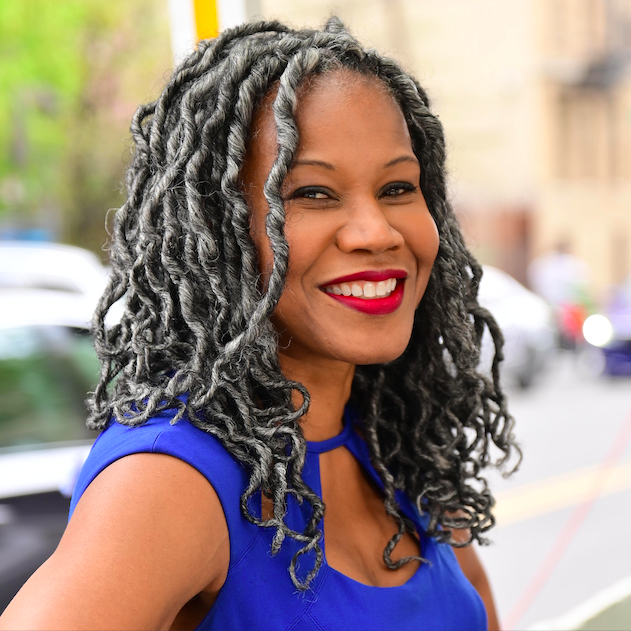
About Majora Carter
Majora Carter is an award-winning urban revitalization strategist, real estate developer, MacArthur Fellow, and founder of Bronxlandia.
A native of the South Bronx, Majora's work focuses on community-centered development and creating quality spaces that help communities attract and retain local talent.
Together with her husband, James Chase, she transformed the landmarked 1908 Hunts Point rail station into Bronxlandia, a multi-use cultural and event venue created as a community "third space" for artists, performances, events, and gathering.
Majora Carter will join us at The Courage to Be on October 17, 2026 at Bronxlandia in the South Bronx.
